
 A New Zealand cancer patient facing a jail term for growing cannabis he uses to alleviate pain pledges to go on a hunger strike if he is imprisoned. Peter Davy, 51, of Timaru, pleaded guilty to cultivating cannabis, but says he uses the herb only for medicinal purposes for himself and his partner, who suffers from multiple sclerosis.
 Oakland's
  More people were arrested last year in New York City for cannabis possession than in the entire 19-year period from 1978 to 1996, according to an analysis released Feb. 11 by the Drug Policy Alliance (
 A federal judge for the US District Court for the Western District of Michigan on Feb. 11 ruled that
  Dr. Jean Colombera, Green party deputy in Luxembourg, has launched a campaign to legalize cannabis in the European statelet after discovering that it can be used to treat tumors. Colombera, a well-known supporter of medicinal cannabis, said that his research team can demonstrate that an extract from a non-psychoactive variety grown in Luxembourg helps to dissolve brain tumor cells.
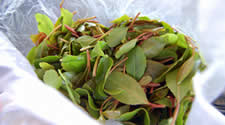 Yemen's opposition has repeatedly
 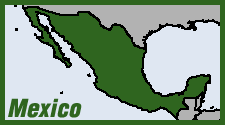 Speaking at the University of Utah's Hinckley Institute of Politics on Feb. 7, US Army Undersecretary Joseph Westphal—the army's second highest ranking civilian official—invoked an "insurgency" mounting in Mexico. His talk focused on the Middle East and South Asia, but in response to a student's question about strategic blind spots in US foreign policy, Westphal said: "One of them in particular for me is Latin America and in particular Mexico. As all of you know, there is a form of insurgency in Mexico with the drug cartels that’s right on our border."
 Canada's Liberal Party announced Feb. 9 that it will oppose



Recent comments
12 weeks 3 days ago
12 weeks 6 days ago
21 weeks 5 hours ago
22 weeks 1 day ago
22 weeks 6 days ago
28 weeks 1 day ago
34 weeks 4 days ago
34 weeks 4 days ago
37 weeks 5 days ago
38 weeks 4 days ago