
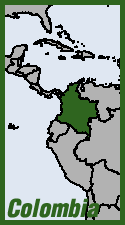
 Since Colombia's FARC guerillas called off their unilateral ceasefire following a military air-strike last month, peace talks with the government have resumed in Havana. As the new phase of talks opened May 25, FARC leaders appealed to the government to instate a bilateral ceasefire. (EFE, May 25) But the very next day, government forces carried out a mixed land and air assault on a camp of the FARC's 18th Front along the Río Chimirindó, in Riosucio municipality, in the Pacific coastal region of Chocó—leaving 41 guerillas dead. Among the dead was the 18th Front's commander, Román Ruiz, authorities said. (El Teimpo, May 26) The day after that, Colombia's air force carried out a new bombardment, targeting the 4th Front of the FARC's Magdalena Medio Bloc at the hamlet of Alto la Cruz, Segovia municipality, in the inland region of Antioquia. Ten guerillas were killed in the air-strikes—which came as the climax of a three-day operation in the area that authorities said left 36 guerillas dead. (El Tiempo, May 27)
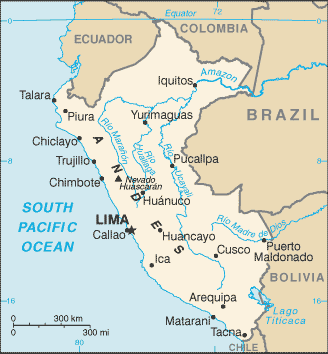 Peru's authorities can't seem to put out the last flicker of the Sendero Luminoso insurgency. A generation ago, the Maoist guerillas seemed capable of toppling the government but are now largely confined to a remote pocket of jungle known as the Apurímac-Ene-Mantaro River Valley (VRAEM). But that happens to be a top coca cultivation zone, affording the insurgency access to funds. Now, authorities claim to have uncovered evidence that the neo-Senderistas are in league with one of the re-organized Colombian cocaine cartels, ironically known as the "Cafeteros" (coffee-producers). "For the first time in an objective and concrete manner, the state can corroborate the link between drug trafficking and terrorism in the VRAEM," Ayacucho regional anti-drug prosecutor
  US
US 



Recent comments
10 weeks 11 hours ago
10 weeks 3 days ago
18 weeks 4 days ago
19 weeks 5 days ago
20 weeks 3 days ago
25 weeks 5 days ago
32 weeks 1 day ago
32 weeks 1 day ago
35 weeks 2 days ago
36 weeks 1 day ago