
 The 2011 Hempcon medical marijuana convention in Denver in October prompted local fears of a "green rush" in the Centennial State. Sixteen states now allow some form of legalized medical marijuana, but only Colorado explicitly allows cannabis businesses to operate as such—making it the first for-profit marijuana marketplace in the United States. Between 2000—when voters approved the state's medical marijuana initiative—and 2008, Colorado issued roughly 2,000 medical marijuana cards to patients living in the state. By 2011, that number had jumped to more than 127,000 paying customers, according to the Colorado Medical Marijuana Registry—with at least 25,000 more have applications pending.
 Medical marijuana patient advocacy group Americans for Safe Access (
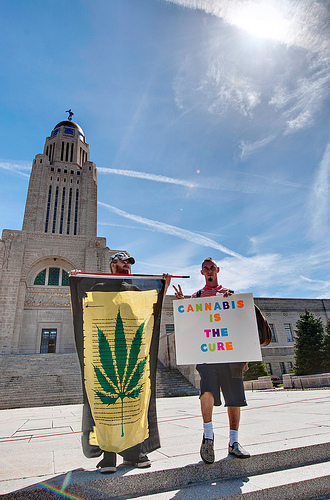 The American Civil Liberties Union (
 Advocacy group Americans for Safe Access (ASA) issued a letter Nov. 17 urging that Los Angeles' prestigious Cedars-Sinai Medical Center promptly re-list 63-year-old patient Norman B. Smith for a liver transplant. Smith was diagnosed with inoperable liver cancer in 2009 and became eligible for a transplant at Cedars-Sinai the following year. Smith's oncologist at Cedars-Sinai, Dr. Steven Miles, approved of his cannabis use to deal with the effects of chemotherapy and pain from an unrelated back surgery. But in February he was removed from the transplant list after testing positive for cannabis use.
 Hundreds of riot police backed up by 200 navy commandos invaded the Rio de Janeiro favelas of Rocinha, Vidigal and Chacara do Ceu in the wee hours of Nov. 13. The next day, the elite Special Operations Police Battalion (BOPE) said they had uncovered the secret "mansion" of wanted drug lord Antônio Bonfim Lopez AKA "Nem" in Rocinha. "Nem" was reportedly arrested at the scene. The shanty-towns had long been controlled by drug gangs, and were a no-go zone for police. Authorities say they plan to pacify dozens more favelas ahead of the 2014 World Cup. (
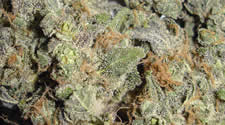 The discovery of a drug tunnel linking San Diego and Tijuana warehouses led to the seizure of some 17 tons of cannabis as well as a large grow operation in the industrial area of Otay Mesa east of San Diego, US and Mexican authorities announced Nov. 16.
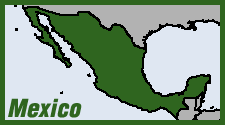 In the predawn hours of Nov. 9, the decapitated and mutilated body of an unidentified man was found at the Christopher Colombus monument in an upscale neighborhood of Nuevo Laredo, Tamaulipas. A message left under the decapitated head named the man as "El Rascatripas," a moderator for the website
 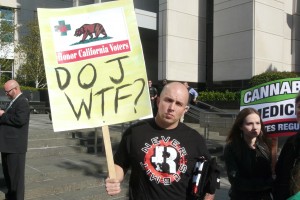 A Nov. 9 rally in Sacramento to protest the US Department of Justice crackdown on California's medical marijuana industry brought out some 500 people, who gathered outside the Federal building to hear speakers from the National Organization for the Reform of Marijuana Laws (



Recent comments
15 weeks 7 hours ago
15 weeks 3 days ago
23 weeks 4 days ago
24 weeks 5 days ago
25 weeks 3 days ago
30 weeks 5 days ago
37 weeks 1 day ago
37 weeks 1 day ago
40 weeks 2 days ago
41 weeks 1 day ago