
 The city of Chicago on April 14 proposed a $5.5 million reparations fund for dozens of torture victims connected to former police Commander Jon Burge and his so-called "midnight crew of rogue detectives," the Chicago Tribune reports. The proposal, negotiated with a plaintiff's attorney and supported by Mayor Rahm Emanuel, would offer free city college tuition for victims and their families, free psychological counseling, and other such assistance to more than 50 potential victims. The city would also issue a formal apology, create a permanent memorial recognizing the victims and ensure that the new generation of students in Chicago public schools is taught about the Burge case. Other inmates who assert their confessions were extracted through torture continue to fight to overturn convictions and win their freedom. The scandal has already cost tax-payers some $100 million in lawsuit settlements, judgments and other legal costs.
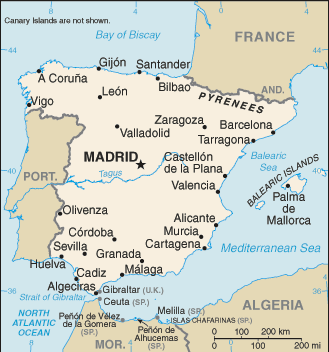 Activists in Spain staged a creative protest against the country's new "Citizen Safety Law" on April 10—projecting holograms of themselves that marched on the parliament building in Madrid. This was making the point that under the law, actual flesh-and-blood marches on government buildings would be banned—along with filming the police, failing to obey police orders, burning the national flag, or holding any protest without a permit.
  Laos was once a major opium producer—and now production is creeping up there again after eradication efforts had dramatically slashed it. But this time around authorities may take a more tolerant and realistic approach.
  When Brooklyn neighborhood website
  March 28 saw more angry protests in Mexico's conflicted southern state of Guerrero, as students from the rural college of Ayotzinapa clashed with police in the state capital Chilpancingo at a march demanding the return alive of the
  DEA agents in Colombia held sex parties with prostitutes hired by narco-traffickers, according to an investigation by the US Justice Department released March 26. In a series of interviews with DoJ's



Recent comments
15 weeks 18 hours ago
15 weeks 3 days ago
23 weeks 4 days ago
24 weeks 5 days ago
25 weeks 3 days ago
30 weeks 6 days ago
37 weeks 1 day ago
37 weeks 1 day ago
40 weeks 2 days ago
41 weeks 1 day ago