
 Mexico's government on May 10 started to swear in members of the "community police" vigilante network in Michoacán state for a new rural police force, which is supposed to bring the self-defense militias under state control. An initial 240 "community police" members gathered for the ceremony in the village of Tepacaltepec, a stronghold of the movement, where they received new blue uniforms and registered their rifles, or turned them in for state-issued AR-15s. The ceremony was overseen by the federal pointman for Michoacán, Alfredo Castillo, who waxed florid for the occassion: "Those who 15 months ago said 'Enough' and decided to confront those who did them harm—because of them today we have the State Rural Force that carries the same conviction of justice, of courage, valour, bravery needed to protect those, who we love the most, our families," A former "community police" leader named Estanislao Beltrán AKA Papá Pitufo (Daddy Smurf), was named as leader of the new State Defense Force. But José Manuel Mireles, who had been the most visible leader of the movement, was not at the ceremony—pointing to the likelihood of some vigilantes refusing to register with the government, even at risk of arrest or confrontation with the "official" security forces.
 The
The 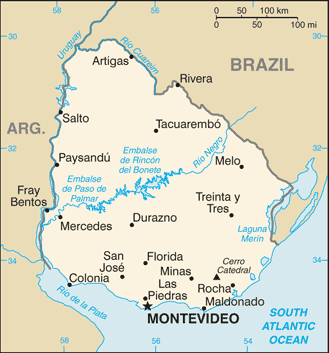 Authorities in Uruguay on May 2 released details on how cannabis will be produced and legally sold in the country, following
 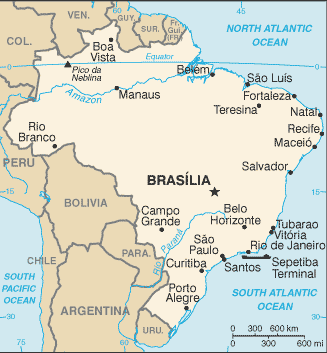 At least three cars, including a police vehicle, were set ablaze in the Rio de Janeiro favela of Complexo do Alemão on April 29 after the fatal shooting of an elderly woman—the latest in a series of such outbreaks as Brazilian authorities attempt to clean up Rio's slums before the World Cup games open next month. Arlinda Bezerra de Assis, 72, died after being shot in the stomach during a gun battle between police and presumed gang members. In another incident on April 23, the favela violence actually spilled into Rio's posh beachfront tourist districts—an unprecedented occurrence that doubtless struck fear deep into the hearts of the city fathers. The protests broke out in the Pavao-Pavaozinho favela, perched on the hills overlooking the famed Copacabana district.
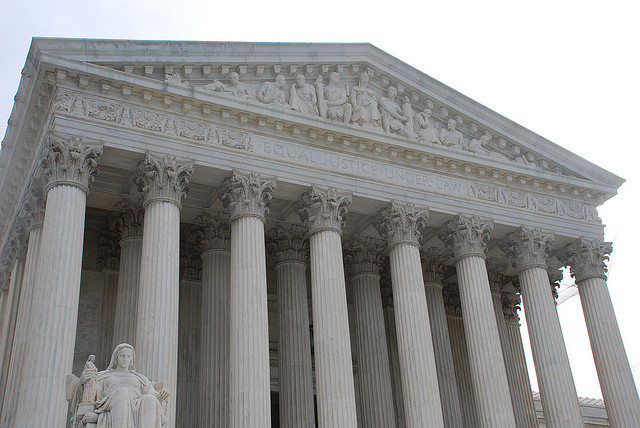 The US Supreme Court ruled 5-4 on April 22 in Navarette v. California that a traffic stop that led to a marijuana arrest was constitutional because police had reasonable suspicion the driver was intoxicated. In 2008, California Highway Patrol officers stopped Lorenzo Prado Navarette's pickup truck on a Mendocino County road based on a 911 tip about reckless driving. The officers said they smelled marijuana when approaching the vehicle. They conducted a search and found 30 pounds of cannabis. Navarette and a passenger were arrested and charged. At trial, they moved to suppress the evidence on grounds that the search violated their Fourth Amendment rights because the officers lacked reasonable suspicion when they pulled Navarette over. But in the opinion authored by conservative Justice Clarence Thomas, the majority found that while an anonymous tip will not always lead to reasonable suspicion, in this case it did. The court found that "under appropriate circumstances, an anonymous tip can demonstrate sufficient indicia of reliability to provide reasonable suspicion to make an investigatory stop." Conservative Justice Antonin Scalia wrote a dissent that was joined by the court's liberals, Ruth Bader Ginsburg, Sonia Sotomayor and Elena Kagan. Conservatives John Roberts and Samuel Alito lined up with the majority, as did swing voters Stephen Breyer and Anthony Kennedy. (
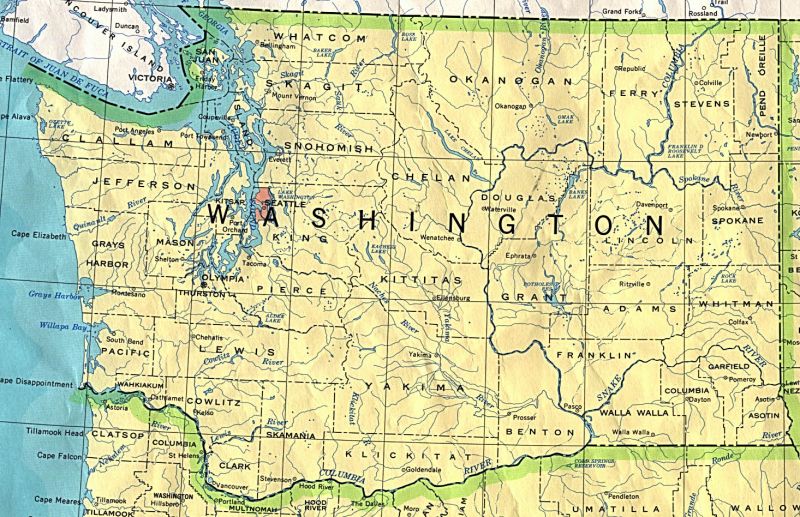 Family members from a rural area of eastern Washington state are to go to trial next month on federal marijuana charges, despite the Obama administration's repeated claims that it does not target seriously ill patients. The federal trial of the "Kettle Falls 5" is scheduled for May 12, pending several pretrial motions which will be heard on April 22 before US District Judge Fred Van Sickle in Spokane, Wash. Because of marijuana's illegal status under federal law, patients like the "Kettle Falls 5" are typically prohibited from raising a medical necessity or state law defense in federal court..



Recent comments
15 weeks 16 hours ago
15 weeks 3 days ago
23 weeks 4 days ago
24 weeks 5 days ago
25 weeks 3 days ago
30 weeks 6 days ago
37 weeks 1 day ago
37 weeks 1 day ago
40 weeks 2 days ago
41 weeks 1 day ago