
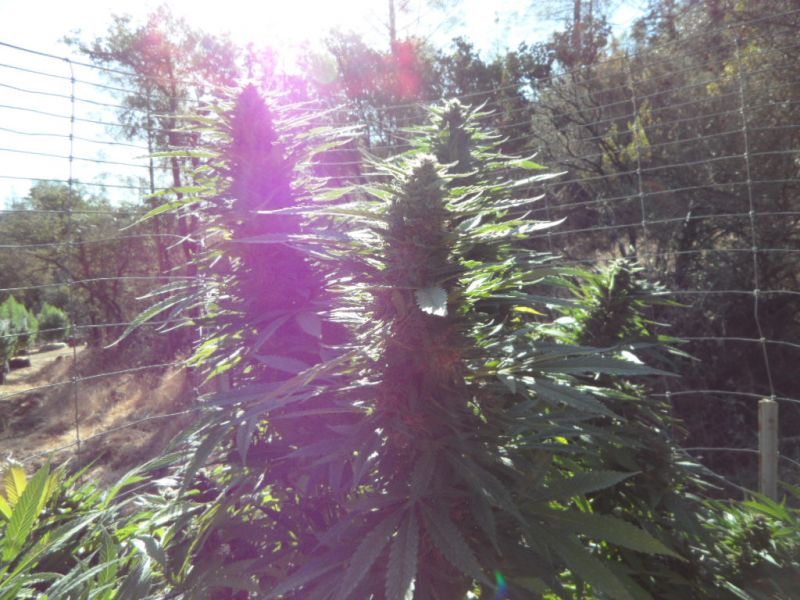
 A market glut and paranoia about criminal cartels getting into the act coincide with the end of the CAMP program. Can Northern California's cannabis industry remake itself along ecological and community-rooted lines?
With the 2012 fall harvest season, Northern California's legendary cannabis-growing Emerald Triangle—centered around the counties of Humboldt, Mendocino and Trinity—is at a turning point. And as the old cliché goes, the Chinese character for crisis is made up of the characters for danger and opportunity.
The current juncture is ripe with both.
 As nightmarish violence continues in Mexico, with horrific massacres and chaotic urban warfare right on the USA's southern border, a couple of academics at England’s University of Sheffield provide a readable 250-page primer on why this is happening now, and take a stab at what can be done to address the crisis—other than escalating it with militarization.
 Authorities in Honduras on Jan. 7 announced the seizure of a gold-plated, jewel-encrusted AK-47 assault rifle, complete with two silver magazines. The rifle, estimated to be worth more than $50,000, turned up in a raid along with other military equipment at a ranch in Choloma, some 300 kilometers from Tegucigalpa, where two security guards were detained. Authorities said the gold-plated rifle had an engraving associated with the Malverde drug gang, which is allegedly in league with Mexico's notorious Zetas. "It's an exclusive design and a fine carving," said National Police chief Leonel Sauceda.
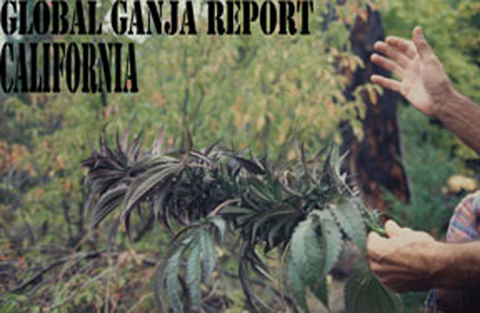 For years, police forces in the Emerald Triangle and elsewhere around backcountry California have been
  Total area planted with coca in Bolivia dropped by up to 13% last year, according to separate reports by the
  The most enlightened cannabis connoisseurs—those who still have a link back to the values that defined the hippie culture—tend to be conscious consumers when it comes to food or computers or whatnot. They may buy organic tomatoes, boycott Taco Bell to support exploited farm workers in Florida, and petition Apple about the brutal conditions in their Chinese assembly plants. But do they pay as much attention to the source of their preferred smoking herb?
 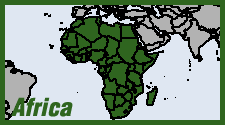 The Cape Flats, a sprawling poor area on the outskirts of Cape Town, has emerged as the epicenter of South Africa's crime crisis, the country's key transshipment point for dagga (cannabis), tik (cystal meth) and heroin. Long-simmering gang wars over control of the traffic exploded into horrific violence this year, leading to political stand-offs over how to respond. Western Cape province has called a special commission of inquiry into police actions in the conflicted township of Khayelitsha following charges that corrupt and aggressive policing has enflamed violence and led to vigilantism. But national Police Minister Nathi Mthethwa says the inquiry is illegal and exceeds provincial powers. In July, a request from West Cape Premier Helen Zille for military troops to patrol the Flats was turned down by President Jacob Zuma. By then, some 25 people, including seven children, had been killed in drug-related violence in the Flats over the past five months. (



Recent comments
16 weeks 1 day ago
16 weeks 4 days ago
24 weeks 5 days ago
25 weeks 6 days ago
26 weeks 4 days ago
31 weeks 6 days ago
38 weeks 2 days ago
38 weeks 2 days ago
41 weeks 3 days ago
42 weeks 2 days ago