
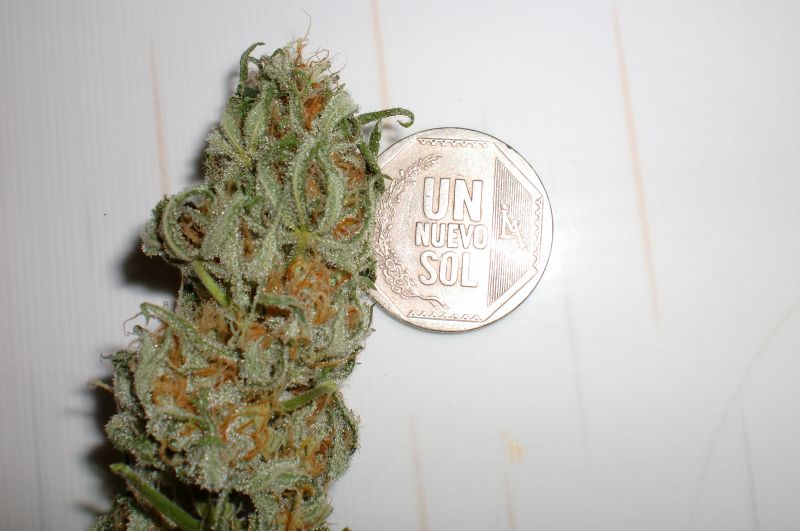
After last year's victories for cannabis legalization measures in Colorado and Washington state, the US prohibition regime is under unprecedented pressure. But there is little awareness in Gringolandia of the strides in breaking with the US-led "war on drugs" in South America. Over the past decade, Argentina and Colombia have removed penalties for personal quantities of drugs, and Uruguay just passed a measure that essentially legalizes cannabis, with even cultivation permitted under state regulation. Venezuela, Bolivia and Ecuador have all barred the DEA from their territory.
That leaves Peru—now overtaking Colombia as the Andes' top coca producer, and also a burgeoning cannabis producer. Like Colombia, Peru remains a stronghold of the DEA in South America—even as it has moved towards decrim of personal quantities. Both countries have experienced long and bloody counterinsurgency wars related to the struggle for control over coca production. Much to Washington's displeasure, Peru even suspended eradication two years ago—before the empire struck back. But now activists are mounting pressure to break with the prohibition model—both in the remote campesino communities of the mountains and jungles, and in the streets of Lima.
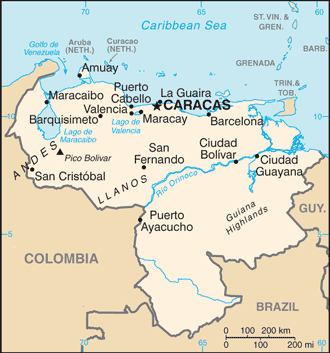 At least two people were shot dead Feb. 12 in student protests in the Venezuelan capital, Caracas. An anti-government protester and a pro-government activist were each killed in an exchange of fire as rival demonstrators clashed, officials said. "He was a comrade assassinated by the right-wing fascist hordes," National Assembly leader
 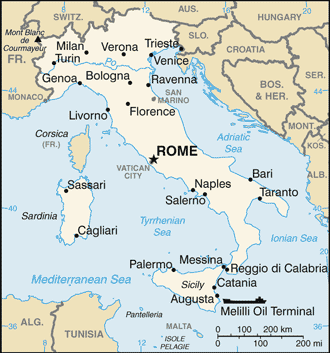 A 15-count indictment was unsealed Feb. 11 in a Brooklyn federal court, charging seven defendants with narcotics trafficking, money laundering, and firearms offenses based on what an
 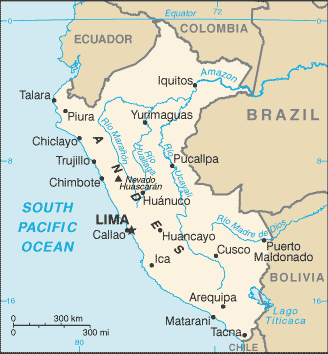 Peru's National Police on Feb. 4 announced the discovery of over 100,000 cannabis plants at the high Andean community of Minasel, 4,000 meters above sea level, on the border of Áncash and Huánuco regions. The plants were burned in the fields, polce said, while the growers escaped into the mountains. (
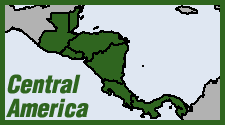 El Salvador's Feb. 2 presidential election was overshadowed by a dramatic spike in the country's homicide rate—less than a year after a truce between warring criminal gangs had led many Salvadorans to hope that their country was back from the brink. Most alarming was the December discovery of 44 bodies in 14 mass graves in a wooded area of Villa Lourdes barrio in Colón, a suburb of the capital San Salvador and a notorious gang stronghold. Many of the bullet-ridden bodies were mutilated and half-naked. Authorities accuse the Barrio 18 gang of depositing their victims in the clandestine graves. A March 2012 truce between Barrio 18 and its deadly rivals, Mara Salvatrucha (
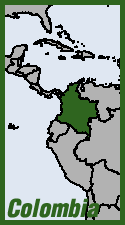 Colombia's



Recent comments
8 weeks 2 days ago
8 weeks 5 days ago
16 weeks 6 days ago
18 weeks 16 hours ago
18 weeks 5 days ago
24 weeks 22 hours ago
30 weeks 3 days ago
30 weeks 3 days ago
33 weeks 4 days ago
34 weeks 3 days ago