
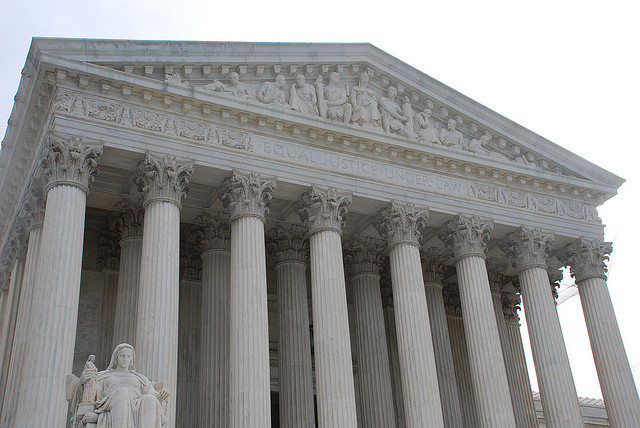
 The Supreme Court has agreed to hear a case that could set limits on the federal government's sweeping powers to seize property in drug cases under "criminal forfeiture" laws. Tony and Terry Honeycutt were charged with federal drug offenses after selling quantities of iodine-based water disinfectant at their camping and hunting store in Chattanooga—because the substance can also be used in the manufacture of methamphetamine. Tony, the actual owner of the store, pleaded guilty, and had $200,000 seized—the amount believed equivalent to his proceeds from the sales of the chemical. Terry fought the charge, and lost. The government then sought an additional $70,000 from him. In Honeycutt v. United States, Terry is arguing that he is not liable for the proceeds because he wasn't an owner of the store.
 In a blow to municipal power to regulate medical marijuana, the US
  A seemingly schismatic Oregon branch of the Native American Church claims the US government illegally seized its sacramental cannabis—and is fighting in court to get it back.
  In an utterly maddening decision, on July 28 the
  The US Supreme Court issued a key ruling in favor of Fourth Amendment rights in the digital age June 25, finding unanimously that police in most cases need a warrant before searching the cellphone or personal electronic device of an arrestee. Chief Justice John Roberts firmly rejected arguments that searches of digital devices are comparable to searches police routinely carry out for contraband after making an arrest. In the cases of



Recent comments
9 weeks 5 days ago
10 weeks 1 day ago
18 weeks 2 days ago
19 weeks 3 days ago
20 weeks 1 day ago
25 weeks 3 days ago
31 weeks 6 days ago
31 weeks 6 days ago
35 weeks 7 hours ago
35 weeks 6 days ago