
 On New Year’s Day, as retail sales of cannabis went legal in Colorado, the state's dispensaries registered well over $1 million in sales. Despite cold and wet weather, most of the 36 shops that opened that day reported long lines, with some customers waiting outdoors for hours. By the end of the first week, by which time another dozen retail outlets had opened, the figure was a whopping $5 million. More than 100 dispensaries in the Centennial State have now received licenses for retail cannabis sales and over 500 are eligible to apply. More are applying every day.
"A new industry is developing in a nascent state in Colorado," says Rachel Gillette, director of the Colorado chapter of the National Organization for the Reform of Marijuana Laws (NORML). "We're not just talking about retail sales, but a lot of other types of business associated with it—construction companies, HVAC contractors, nutrient companies, lighting and equipment sales, packaging, printers, labeling, marketing materials, websites, marijuana tourism, attorneys, payroll companies… This could represent a lot of jobs."
 The US
  A Sept. 30
 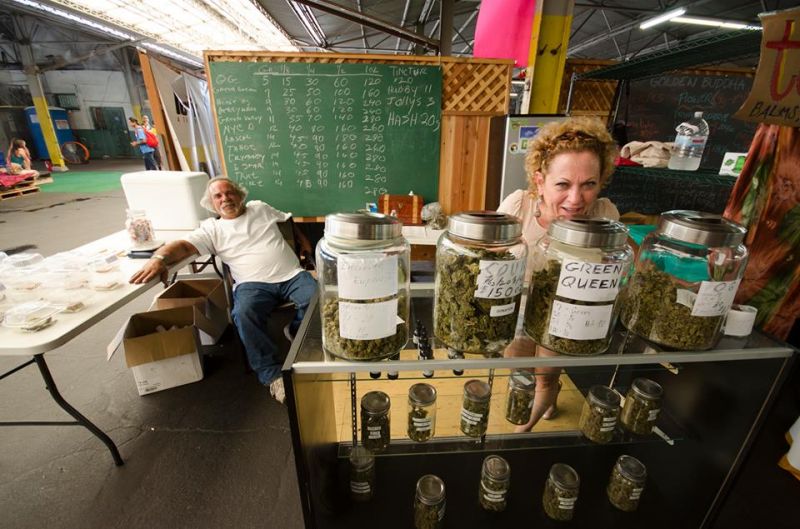 Los Angeles' first-ever marijuana farmers market was
 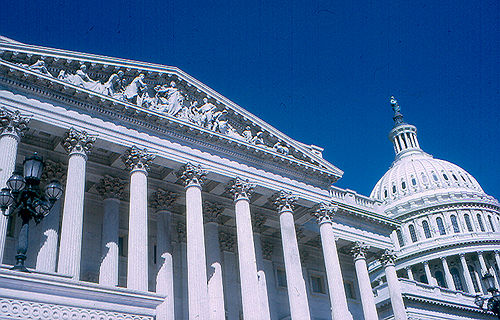 In an unprecedented 219-189 floor vote late May 29, the House of Representatives approved the end of funding for Department of Justice (DoJ) enforcement in medical marijuana states. Advocates are hailing the vote as a major victory that signals a shift in the approach Congress is taking on this issue. The vote was on Amendment No. 25 to the Commerce, Justice & Science (CJS) appropriations bill. One hundred seventy Democrats and 49 Republicans voted in favor of the amendment. "This Congressional vote is a huge victory for patients," said Steph Sherer, executive director of Americans for Safe Access. "No longer will we have to look over our shoulder and worry when the next raid or indictment will prevent us from safely and legally accessing our medicine. This is a game-changer that paves the way for much more policy change to come."
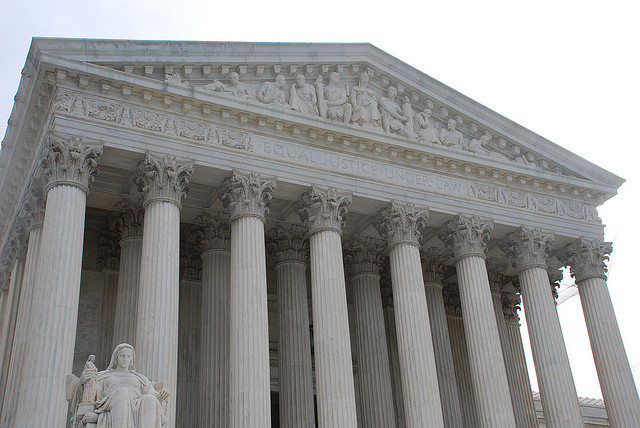 The US Supreme Court ruled 5-4 on April 22 in Navarette v. California that a traffic stop that led to a marijuana arrest was constitutional because police had reasonable suspicion the driver was intoxicated. In 2008, California Highway Patrol officers stopped Lorenzo Prado Navarette's pickup truck on a Mendocino County road based on a 911 tip about reckless driving. The officers said they smelled marijuana when approaching the vehicle. They conducted a search and found 30 pounds of cannabis. Navarette and a passenger were arrested and charged. At trial, they moved to suppress the evidence on grounds that the search violated their Fourth Amendment rights because the officers lacked reasonable suspicion when they pulled Navarette over. But in the opinion authored by conservative Justice Clarence Thomas, the majority found that while an anonymous tip will not always lead to reasonable suspicion, in this case it did. The court found that "under appropriate circumstances, an anonymous tip can demonstrate sufficient indicia of reliability to provide reasonable suspicion to make an investigatory stop." Conservative Justice Antonin Scalia wrote a dissent that was joined by the court's liberals, Ruth Bader Ginsburg, Sonia Sotomayor and Elena Kagan. Conservatives John Roberts and Samuel Alito lined up with the majority, as did swing voters Stephen Breyer and Anthony Kennedy. (



Recent comments
12 weeks 3 days ago
12 weeks 6 days ago
21 weeks 17 hours ago
22 weeks 1 day ago
22 weeks 6 days ago
28 weeks 2 days ago
34 weeks 4 days ago
34 weeks 4 days ago
37 weeks 5 days ago
38 weeks 4 days ago