
 A deadly five-car pile-up on a Bay Area freeway brings into sharp focus the questions around cannabis use and road safety. Media exploitation of such carnage as propaganda against legalization, however, is missing some critical points.


This work is licensed under a Creative Commons Attribution-Noncommercial-No Derivative Works 3.0 Unported License.

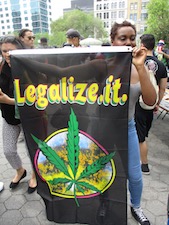 Suddenly, New York state's political establishment is looking seriously at cannabis legalization, driven by growing concerns over long-entrenched racial discrimination in enforcement of the marijuana laws. But there is a growing realization that legalization alone will not be enough to correct this legacy unless it is implemented in way explicitly designed to do so.
 California's Gov. Jerry Brown has unveiled a special investigative force to go after unregistered cannabis growers. This is certainly bad news for the many growers who have failed to register because they consider the taxes and regulations burdensome. In the face of disappointing tax revenues from legal cannabis, is the state using the stick of enforcement rather than the carrot of lower taxes and more favorable regulations to bring more growers in from the shadows?
 Around the world, mothers are on the frontlines of demanding legal access to cannabis products for their children who suffer from epilepsy and other ailments. Often, these courageous moms have risked their freedom to provide medicine for their offspring. Sometimes they have actually shamed the authorities into changing the law—but still face the prospect of prison time.
 A federal appeals court has turned down a challenge by the cannabis industry to the DEA's official finding that CBD is a controlled substance. But questions about whether CBD should be treated as a controlled substance remain pending at the state level.
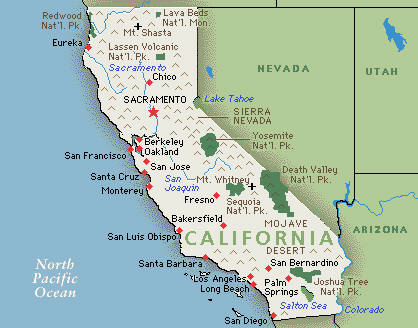 Five months into legal cannabis in the Golden State, the temporary licenses issued by authorities to get things off the ground are running out. But the full annual licenses are still being held up by several factors—including the failure of local authorities to approve cannabis operations, and implementation of a "track-and-trace" system to monitor marijuana from seed to sale.
  The city of Seattle has filed a motion to vacate hundreds of marijuana convictions going back more than 20 years. As these convictions disproportionately affected people of color, this is being hailed as an important step toward "cannabis equity"—implementing legalization in a way that addresses the social injustices associated with prohibition.



Recent comments
7 hours 5 sec ago
16 weeks 2 days ago
16 weeks 5 days ago
24 weeks 6 days ago
26 weeks 8 hours ago
26 weeks 5 days ago
32 weeks 15 hours ago
38 weeks 3 days ago
38 weeks 3 days ago
41 weeks 4 days ago