
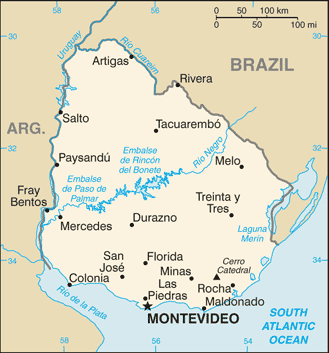
 A year after legal cannabis first went on sale in Uruguay, it is still only available at a small handful of pharmacies. One particularly ironic obstacle has emerged: Uruguay's banks face US sanctions under the Patriot Act if they do any business with the country's legal cannabis industry. So a measure passed by the US Congress to crack down on criminal and terrorist networks that use drug profits is actually helping to keep cannabis under the control of criminal networks.
 Canada is about to make history, with passage of its cannabis legalization bill imminent. Prime Minister Justin Trudeau is the man of the hour, shepherding the first Western industrialized country along a course that was nearly unthinkable a generation ago. But it was activist efforts that really brought Canada to this point—and advocates are still fighting to keep a place for small growers and vendors in the new system.
 The government of New Zealand has announced that it plans to hold a referendum on cannabis legalization, possibly as early as next year. A medical marijuana bill is already pending in the country's parliament. But it has taken generations of activist effort by Kiwis to bring Aotearoa (by the country's indigenous Maori name) to this point. Cannabis Now speaks with some of the leaders who made it happen.
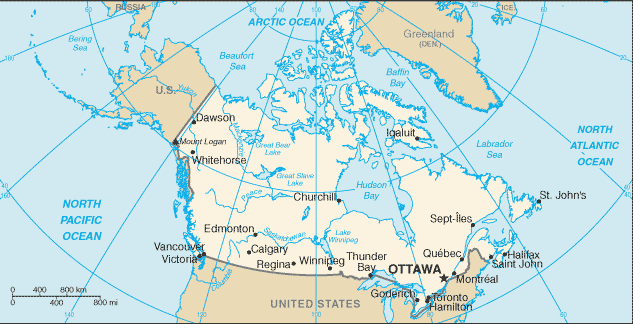 Amid the controversies over how Canada's federal government and provinces will divide regulatory oversight as well as the tax revenues from legal cannabis, a largely overlooked question is the role of the country's First Nations. With passage of the Canadian Cannabis Act now imminent, indigenous groups agree they want more involvement in the process. But First Nations are divided between those hoping for a windfall from legal sales and those actually calling for passage of the Cannabis Act to be put off because native peoples were not properly consulted.
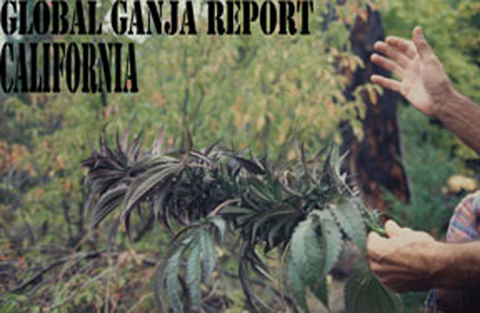 In Humboldt County, famed as the heartland of Northern California's cannabis-producing Emerald Triangle, big police raids of cultivation sites—with thousands of plants eradicated—are continuing despite the Golden State's new legalization program. Many growers are choosing to remain underground, in spite of the risks to their property and freedom. And a big part of the reason why seems to lie in a confusing and contested county regulation regime.
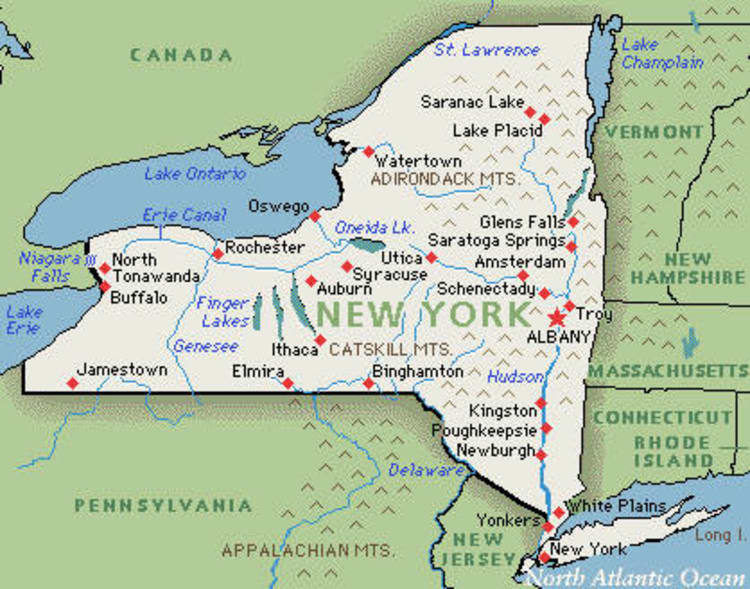 Things are moving fast in the Empire State, with cannabis legalization proposals striding toward mainstream acceptance—spurred by a growing sense of injustice over the racial disparities in enforcement. In what could be a watershed moment, the state Democratic Party just adopted a resolution to embrace legalization. The party elite seem to be feeling the pressure from below in a gubernatorial election year.
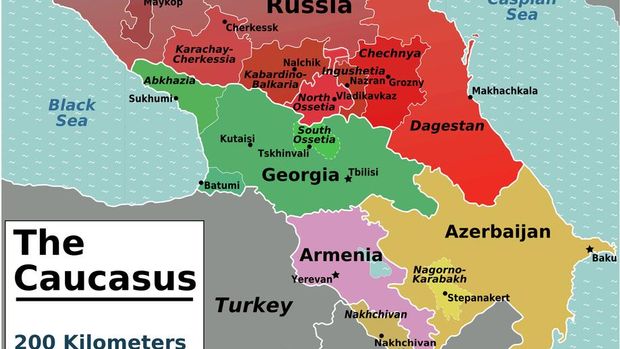 A protest in the Caucasus republic of Georgia to demand legalization of personal drugs use, with an emphasis on cannabis, points to changing times in the former USSR. The youth group behind the protest was first formed to demand freedom for a popular artist who was sentenced to 14 years for possession of a small amount of herb. The country's top court actually struck down penalties for cannabis possession as a result of the case. But the activists are pressing their campaign—a sign of cultural thaw in a region with very harsh drug laws.



Recent comments
11 weeks 3 days ago
11 weeks 6 days ago
20 weeks 58 min ago
21 weeks 1 day ago
21 weeks 6 days ago
27 weeks 1 day ago
33 weeks 3 days ago
33 weeks 4 days ago
36 weeks 4 days ago
37 weeks 4 days ago